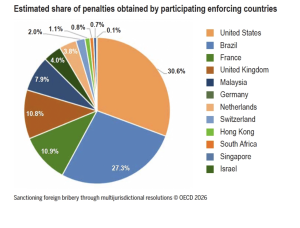
For decades, multinational corporations evaluated anti-corruption risks primarily through the compliance framework of the U.S. Foreign Corrupt Practices Act (FCPA). However, the latest findings from the OECD report reveal a highly diversified enforcement landscape, signaling that cross-border bribery prosecution has evolved into a multi-centered global effort.
Since 2008, data indicates that 114 foreign bribery cases have been resolved through coordinated, multilateral enforcement actions, resulting in over $33.7 billion in financial penalties and asset confiscations. While the United States remains a prominent enforcement power, it currently accounts for only 31% of total global penalties. Authorities in France, Brazil, the United Kingdom, Switzerland, Singapore, and South Africa are increasingly leading complex, independent, and cross-border investigations.
This global shift fundamentally reshapes corporate compliance requirements. A regulatory inquiry initiated by a single country can rapidly trigger parallel investigations, formal data requests, and subsequent enforcement actions across multiple sovereign jurisdictions. Consequently, the OECD report underscores that the core operational challenge is no longer just the scale of monetary fines, but managing overlapping regulatory demands. To navigate this complexity successfully, organizations must transition toward robust, verifiable prevention systems, relying on routine internal audits and thorough third-party screening to validate compliance standards before foreign regulators step in.