

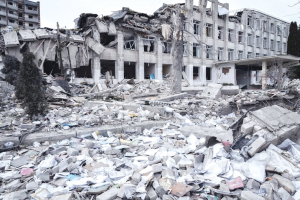
U.S. sanctions policy toward Russia is navigating a structural divergence. While lawmakers drive aggressive legislation to squeeze Moscow’s economy, executive enforcement is taking a more flexible approach. With the Sanctioning Russia Act advancing through Congress, lawmakers are targeting major buyers of Russian energy, exposing third-country entities in China, India, and Brazil to secondary sanctions risks. […]

The European Union has formally adopted its 21st package of sanctions against Russia, marking another major escalation in its regulatory framework. This package targets the critical financial, maritime, and industrial nodes sustaining Russia’s war effort. While expanding structural prohibitions, the text also underlines the diplomatic balances required to secure approval among Member States. Banking Restrictions, […]

In direct response to the European Union’s latest sanctions targeting Russia, China has weaponized its trade regulations. Beijing officially added 14 prominent European companies to its restricted entity list, signaling a major geopolitical shift. Key defense and industrial leaders-including Rheinmetall, Lafert Group, IHC, and Tatra Trucks-are directly targeted by these measures. Strict Licensing Limits and […]

U.S. export controls targeting the Chinese technology sector have reached unprecedented levels. The Bureau of Industry and Security (BIS) continuously expands the EAR, leveraging the Foreign Direct Product Rule (FDPR) to restrict advanced computing and AI hardware. Despite these measures, export data shows sustained trade volumes in semiconductor-related items, highlighting a stark contrast between enforcement […]
Over the past five years, the U.S. Bureau of Industry and Security (BIS) Entity List expanded from 1,350 to more than 3,300 designated entities. This 2.5-fold increase is not merely an isolated datapoint. It reflects the fundamental integration of trade compliance into global foreign policy and national security agendas. Fragmented Regimes and the Reach of […]
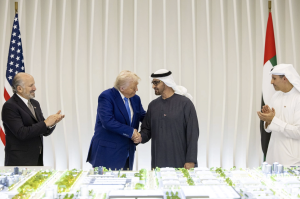
The U.S. Bureau of Industry and Security (BIS) officially implemented a significant regulatory update: reclassifying the United Arab Emirates (UAE) from Country Groups D:3 and D:4 to Country Group A:5 under the Export Administration Regulations (EAR). This reclassification removes longstanding proliferation restrictions and streamlines cross-border transfers of dual-use and defense technologies to the region. Key […]

A new approach to export control The U.S. Bureau of Industry and Security (BIS) has introduced an Approved Supplier Registry for software and component suppliers involved in the production of connected vehicles. This initiative reflects a broader evolution in U.S. export control policy, where compliance increasingly extends beyond the finished product to the entire supply […]

The Anthropic case marks a turning point In June 2026, Anthropic found itself at the center of an unprecedented decision by the U.S. Department of Commerce. The company was instructed to restrict access for certain foreign nationals to two of its AI models, Claude Mythos 5 and Claude Fable 5, on the grounds that such […]

Long considered primarily a logistical and geopolitical issue, transit through the Strait of Hormuz now poses a major regulatory risk for companies operating internationally. The recent decision by the Office of Foreign Assets Control (OFAC) to strengthen its sanctions regime targeting entities involved in the management of the strait requires shipowners, shippers, and exporters to […]
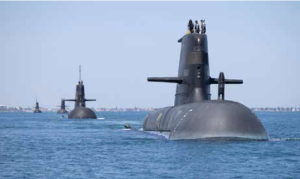
To resolve industrial base pressures and complex deployment challenges, the AUKUS pact partners (Australia, the United Kingdom, and the United States) are shifting toward a more streamlined, actionable footing. Two interconnected decisions are restructuring the alliance’s timeline, focusing on operational readiness and defense innovation. Under Pillar I, Australia is optimizing its submarine transition pathway to […]