

Product classification remains one of the most intricate and resource-intensive pillars of global trade management. Driven by the continuous evolution of international sanctions and the intense technical complexity of modern industrial components, traditional manual workflows are rapidly reaching their operational limits, turning process modernization into a critical requirement. In a recent feature for Export Compliance […]

The recent settlement announced by the U.S. Department of Commerce’s Bureau of Industry and Security (BIS) involving German engineering giant Bosch underscores the far-reaching extraterritorial power of U.S. export controls. Bosch has agreed to a $36 million civil penalty to resolve allegations that its non-U.S. subsidiaries transferred restricted technology to China’s Huawei and its affiliates […]
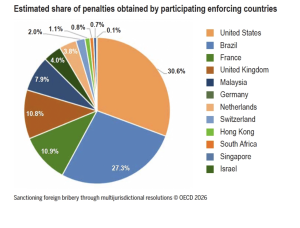
For decades, multinational corporations evaluated anti-corruption risks primarily through the compliance framework of the U.S. Foreign Corrupt Practices Act (FCPA). However, the latest findings from the OECD report reveal a highly diversified enforcement landscape, signaling that cross-border bribery prosecution has evolved into a multi-centered global effort. Since 2008, data indicates that 114 foreign bribery cases […]

The official announcement of the European Union’s 21st restrictive measures framework, released alongside a comprehensive update to the European Commission’s FAQ, introduces an unprecedented level of trade pressure. This latest update to international sanctions deploys critical prohibitions that force global supply chain operators to immediately execute a rigorous risk audit. The newly proposed regulatory framework […]
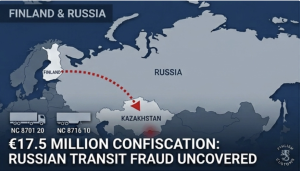
Sanctions circumvention through diverted routing toward secondary destinations like Kazakhstan or Turkey is facing aggressive criminal prosecution across the European Union. Finnish Customs have officially concluded a landmark preliminary investigation, signaling that enforcement bodies are actively looking past paperwork to verify the physical reality of cross-border trade. The case involves a local company suspected of […]

Providing professional services to a restricted entity carries high regulatory risks, but allowing that entity to fall behind on payments can lead to severe enforcement actions. FTI Consulting recently demonstrated this vulnerability by agreeing to a $1.05 million settlement with the U.S. Department of the Treasury’s Office of Foreign Assets Control (OFAC) regarding Russian trade […]

The global crackdown on trade circumvention is intensifying across Central Asia. Kyrgyzstan, which had evolved into a key transshipment hub for re-exporting restricted technologies to Russia, has recently shifted its policy under the immediate threat of secondary sanctions from Western nations. Following targeted intelligence sharing from U.S. and UK enforcement bodies-specifically OFAC and OTSI the […]
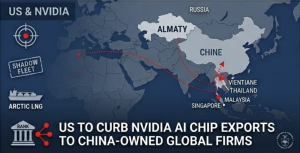
The U.S. Department of Commerce (BIS) has recently enacted a major enforcement shift, closing a critical legal loophole that previously allowed Chinese tech firms to bypass semiconductor restrictions. For over a year, these entities successfully leveraged geographical blind spots to legally purchase top-tier artificial intelligence processors, including Nvidia’s flagship architectures. The circumvention method involved establishing […]

In global trade, a single ECCN (Export Control Classification Number) classification error can instantly block an entire shipment. Yet, in many industrial companies, export classification is still managed through outdated methods: manual spreadsheets, repetitive administrative tasks, lengthy legal research, and occasionally obsolete regulatory data. This operational gap directly undermines a company’s overall compliance framework. The […]

The European Union has reached a critical milestone in its trade restrictions framework by enforcing its 20th sanctions package. This regulatory update demonstrates a definitive resolve to disrupt the logistical and financial bypass networks undermining current international sanctions. For global organizations, evaluating these comprehensive prohibitions is essential to upholding strict compliance standards. For the first […]