

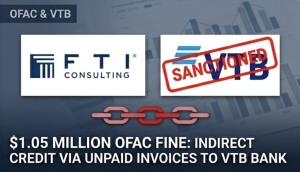
Providing professional services to a restricted entity carries high regulatory risks, but allowing that entity to fall behind on payments can lead to severe enforcement actions. FTI Consulting recently demonstrated this vulnerability by agreeing to a $1.05 million settlement with the U.S. Department of the Treasury’s Office of Foreign Assets Control (OFAC) regarding Russian trade […]
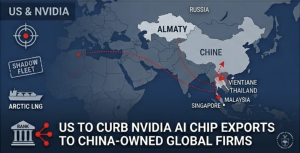
The U.S. Department of Commerce (BIS) has recently enacted a major enforcement shift, closing a critical legal loophole that previously allowed Chinese tech firms to bypass semiconductor restrictions. For over a year, these entities successfully leveraged geographical blind spots to legally purchase top-tier artificial intelligence processors, including Nvidia’s flagship architectures. The circumvention method involved establishing […]
The Office of Foreign Assets Control (OFAC) continues to refine its sanctions programs with the release of several regulatory updates and expanded oversight lists. These updates are vital for navigating the complex landscape of international sanctions, defining the precise boundaries between prohibited activities and the temporary exemptions authorized under U.S. law. Regarding the Russia-related sanctions […]

The American tech firm Super Micro is currently facing a major compliance crisis following the announcement of an independent investigation and a comprehensive overhaul of its internal protocols. This decision comes in the wake of a U.S. Department of Justice (DoJ) indictment targeting three individuals linked to the firm, highlighting the drastic oversight authorities are […]

The effectiveness of international sanctions relies on a precision mechanism that evasion networks strive to jam every day. Hong Kong’s current situation serves as a textbook case for any compliance professional. In 2019, when the U.S. Treasury blacklisted a Hong Kong-based company involved in procuring sensitive technology for Iran’s ballistic program, the objective was to […]

Access to U.S. artificial intelligence technologies was already tightly controlled. With the launch of the American AI Exports Program, the United States is taking a further step by significantly reshaping its approach to export control. The Department of Commerce is no longer limited to issuing licenses. It is now adopting a more proactive role by […]

In mid-April 2026, the expiration of General License U issued by the Office of Foreign Assets Control led to widespread interpretations among international trade operators. Some viewed this license as a signal of easing sanctions on Iranian oil. In reality, this interpretation proved largely misleading. While U.S. authorities did temporarily authorize certain transactions involving Iranian […]

The U.S. Department of Justice has filed civil forfeiture actions targeting more than $15.3 million allegedly linked to an Iranian oil shipping network operating under sanctions. Beyond the amount involved, this case highlights a significant shift in how authorities approach sanctions enforcement. According to U.S. authorities, these funds were used to support activities related to […]
The Bureau of Industry and Security at the U.S. Department of Commerce has issued a final rule revising its licensing policy for certain advanced semiconductors exported to China and Macau. This update is part of the broader U.S. strategy to tighten technology export controls and limit China’s access to sensitive technologies. The revised framework introduces […]

The United States is considering easing certain sanctions targeting Venezuela’s oil sector, signaling a potential shift in the pressure policy in place since 2019. Recent developments suggest that Washington is exploring regulatory mechanisms to gradually restore the country’s oil exports. According to available information, U.S. authorities may rely on the issuance of general licenses to […]