


On November 1, 2025, the White House announced a one-year suspension of the Bureau of Industry and Security’s “50 Percent Rule,” also known as the Affiliate Rule. The suspension, effective November 10, 2025, is part of the broader economic agreement reached between the United States and China and represents an unexpected shift in U.S. export […]
On October 22, U.S. authorities took a further step in tightening sanctions against Russia’s energy industry. The Office of Foreign Assets Control (OFAC) announced the designation of two major Russian oil companies, Rosneft and Lukoil, under Executive Order 14024, adding them to the SDN List. As a result, all assets of these companies subject to […]

On October 30, 2025 during a meeting in South Korea between the U.S. and Chinese presidents, President Trump announced the conclusion of a renewable one-year agreement suspending China’s export restrictions on rare earth elements. These restrictions, originally adopted on October 9, had raised major concerns across global industries dependent on these critical materials. This temporary […]

On October 16, 2025, U.S. Treasury Secretary Scott Bessent urged Japan to fully halt its remaining imports of Russian energy. The discussion took place in Washington during meetings alongside the IMF, G7 and G20 financial summits. This diplomatic move marks a new phase in the U.S. strategy to further isolate the Russian economy through coordinated […]

The U.S. Department of Justice (DoJ) announced on September 30, 2025, two new criminal cases illustrating the continued tightening of U.S. export control enforcement, especially in relation to Russia. These cases reaffirm the increasingly extraterritorial approach adopted by U.S. authorities since 2022 and their willingness to prosecute any actor involved in circumventing American export regulations. […]
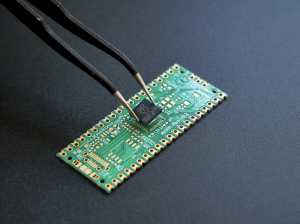
The U.S. Bureau of Industry and Security (BIS) has announced a major regulatory shift that will significantly impact companies exporting semiconductor manufacturing equipment and related technologies. The agency has decided to end the Validated End-User (VEU) program, a framework that allowed certain foreign companies to receive controlled items without a specific export license. Beginning December […]

On July 23, 2025, the U.S. government released its national AI Action Plan together with Executive Order 14320 dedicated to promoting the export of American artificial intelligence technologies. This marks a significant shift in how AI technologies will be regulated under U.S. export control rules. The new Executive Order provides official guidance for companies that […]

The management of export compliance has become increasingly complex as global supply chains evolve and products integrate components originating from multiple jurisdictions. Even a minor part sourced from the United States and subject to the Export Administration Regulations (EAR) can trigger U.S. export controls for the entire product, regardless of its proportion in the final […]

The US Commerce Control List (CCL) has been updated significantly in Category 3, which covers semiconductors and related technologies. These revisions tighten export controls-especially toward China-and require companies to step up their compliance measures. New ECCNsKey additions include: 3B993 / 3B994: advanced semiconductor manufacturing equipment; 3D992 / 3D993 / 3E992: software and technologies related to […]
The AUKUS partnership between Australia, the UK and the United States is reshaping the strategic landscape of defense cooperation. By aiming to simplify licensing processes and facilitate the exchange of sensitive technologies, AUKUS could significantly accelerate industrial collaboration across key defense sectors. However, this shift comes with substantial compliance considerations. First, ITAR restrictions remain a […]