


On December 10, the U.S. Bureau of Industry and Security (BIS) issued an administrative order against Exyte Management GmbH for multiple violations of the Export Administration Regulations (EAR). This case highlights a compliance risk that is often underestimated by companies, namely the export of EAR99 items to restricted entities. Between March 2021 and March 2022, […]

On January 6, the U.S. Department of the Treasury’s Office of Foreign Assets Control (OFAC) issued General License 13P (GL 13P), introducing a temporary authorization for certain transactions that are otherwise prohibited under Directive 4 of Executive Order 14024. This development reflects the continued evolution of U.S. sanctions policy toward Russia, balancing restrictive measures with […]
On January 8, the U.S. House of Representatives adopted the Commerce, Justice, Science, and Related Agencies Appropriations Bill for fiscal year 2026, including a $44 million increase in funding for the Bureau of Industry and Security (BIS). This decision reflects a clear strengthening of U.S. export control policy, with a growing focus on enforcement capabilities. […]

A new wave of U.S. sanctions against Iran’s oil logistics On December 18, the U.S. Treasury’s Office of Foreign Assets Control (OFAC) announced a new round of sanctions targeting 29 vessels and their associated maritime management companies involved in the clandestine transport of Iranian petroleum products. According to U.S. authorities, these operations enabled the export […]

A new enforcement case targeting AI and semiconductor exports U.S. federal prosecutors have charged two individuals for their involvement in a scheme designed to illegally acquire and export advanced Nvidia AI chips to China and Hong Kong, in violation of U.S. export control regulations. The case illustrates the increasing enforcement focus on artificial intelligence and […]
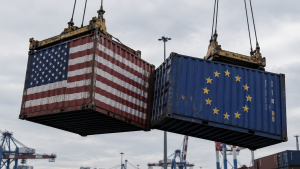
Trade relations between the European Union and the United States are entering a renewed phase of tension. Washington has signaled the possibility of imposing additional tariffs on eight European countries, including France, Germany, and the United Kingdom. Although these measures have not yet been formally adopted, current announcements suggest a phased approach, with 10% tariffs […]

The United States is moving toward a major shift in its export control enforcement policy. A bill recently introduced in Congress proposes a historic tightening of civil penalties under the Export Control Reform Act (ECRA), signaling a tougher stance on violations involving sensitive technologies. The proposal would first significantly raise the maximum civil fine, increasing […]

Quantum technologies are now among the most closely monitored areas of export control policy. Recent regulatory updates in the UK, the European Union, and the United States point in the same direction: quantum is no longer a distant or purely experimental field, but a strategic technology with direct security implications. This growing scrutiny is driven […]

In 2025, U.S. sanctions are no longer limited to end users. Driven by the Office of Foreign Assets Control (OFAC), enforcement now targets the entire global supply chain. Manufacturers, brokers, logistics providers, and financial institutions are increasingly exposed to sanctions risk when weaknesses are identified anywhere along the chain. This shift reflects a more systemic […]

The U.S. export control framework may soon become significantly stricter. On October 28, a draft bill identified as H.R. 5853 was introduced in the House of Representatives, aiming to substantially strengthen civil penalties under the Export Control Reform Act (ECRA). One of the key measures proposed is a sharp increase in the maximum civil fine. […]