

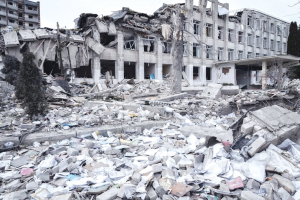
U.S. sanctions policy toward Russia is navigating a structural divergence. While lawmakers drive aggressive legislation to squeeze Moscow’s economy, executive enforcement is taking a more flexible approach. With the Sanctioning Russia Act advancing through Congress, lawmakers are targeting major buyers of Russian energy, exposing third-country entities in China, India, and Brazil to secondary sanctions risks. […]

The European Union has formally adopted its 21st package of sanctions against Russia, marking another major escalation in its regulatory framework. This package targets the critical financial, maritime, and industrial nodes sustaining Russia’s war effort. While expanding structural prohibitions, the text also underlines the diplomatic balances required to secure approval among Member States. Banking Restrictions, […]
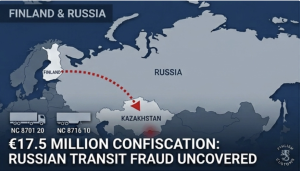
Sanctions circumvention through diverted routing toward secondary destinations like Kazakhstan or Turkey is facing aggressive criminal prosecution across the European Union. Finnish Customs have officially concluded a landmark preliminary investigation, signaling that enforcement bodies are actively looking past paperwork to verify the physical reality of cross-border trade. The case involves a local company suspected of […]
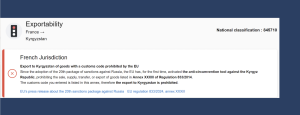
The global crackdown on trade circumvention is intensifying across Central Asia. Kyrgyzstan, which had evolved into a key transshipment hub for re-exporting restricted technologies to Russia, has recently shifted its policy under the immediate threat of secondary sanctions from Western nations. Following targeted intelligence sharing from U.S. and UK enforcement bodies-specifically OFAC and OTSI the […]

The European Union has reached a critical milestone in its trade restrictions framework by enforcing its 20th sanctions package. This regulatory update demonstrates a definitive resolve to disrupt the logistical and financial bypass networks undermining current international sanctions. For global organizations, evaluating these comprehensive prohibitions is essential to upholding strict compliance standards. For the first […]

The French National Anti-Terrorism Prosecutor’s Office (Pnat) has reached a critical stage in its investigation into the French machine-tool manufacturer Huron-Graffenstaden. The company’s CEO has been formally indicted for the organized smuggling of dual-use goods. This development highlights the end of a certain regulatory tolerance regarding complex re-exportation circuits and the significant tightening of controls […]

A recent Lithuanian report highlights a concerning evolution in the mechanisms used to circumvent sanctions targeting Russia. According to the findings, companies registered within the European Union, particularly in Lithuania, have been used to facilitate access to Western technologies through networks linked to Russia. The report notably refers to a company based in Vilnius that […]

The Council of the European Union has approved the final adoption of a regulation providing for the phased-out of Russian gas imports, whether transported via pipeline or as liquefied natural gas. This decision is part of the REPowerEU strategy, which aims to end the European Union’s energy dependence on Russia. The measure provides for a […]

Under the European sanctions against Russia, Regulation 833/2014 relies heavily on lists of products identified by their customs codes (HS codes). These codes have become a central component of export controls: they determine whether a product is prohibited, restricted, or subject to authorization. With the gradual expansion of sanctions, the scope of controls is no […]

On January 6, the U.S. Department of the Treasury’s Office of Foreign Assets Control (OFAC) issued General License 13P (GL 13P), introducing a temporary authorization for certain transactions that are otherwise prohibited under Directive 4 of Executive Order 14024. This development reflects the continued evolution of U.S. sanctions policy toward Russia, balancing restrictive measures with […]